Movement Is the First Language
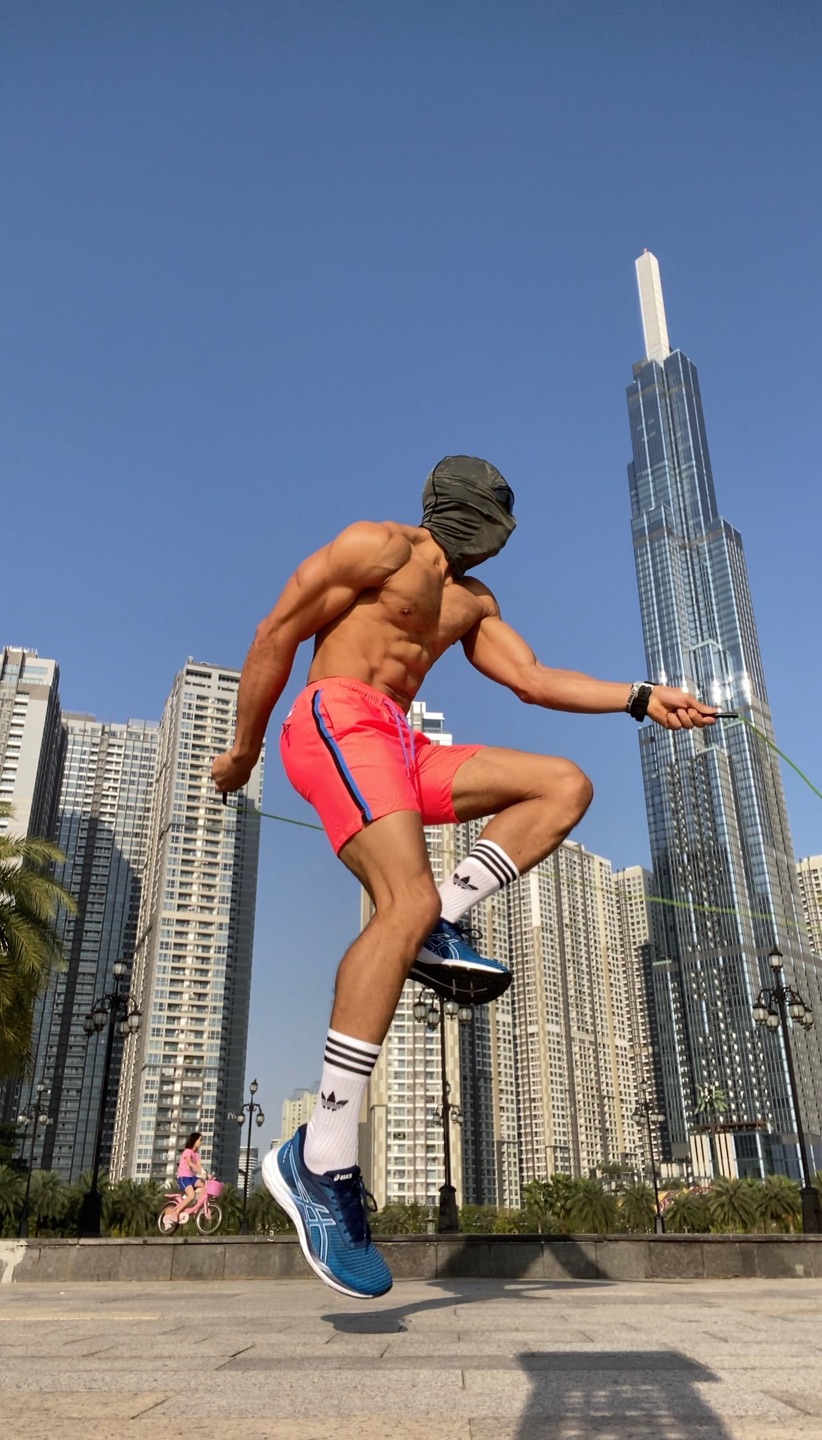
Before the releases and before the estate, there was rope-work against a skyline - and the music inherited its timing from the body.
Cadence you can trust
Rope skipping punishes irregularity immediately - miss time once and the session stops. That feedback loop builds an internal metronome of unusual reliability, and you can hear its fingerprint in how percussion locks across the catalog: grids stay steady under dense layers because they were trained, not programmed, into the practitioner.
Choreography without choreography
None of the training footage is staged as dance, yet it reads as choreography. The reason is economy: repetitions stripped of wasted motion acquire lines. The mid-air studies in the photo archive capture apex positions a dancer would recognize - extension, axis, landing intention - achieved through sport rather than performance.
Structure under load
Static holds are the second teacher. A side plank held against wind on a rooftop deck is a study in distributed effort, and that distribution - load spread across a system rather than dumped on one joint - mirrors how the suites distribute thematic weight across dozens of tracks instead of leaning on singles.
Why it stays in public
Documenting the training openly does double duty: it holds the practitioner accountable and it gives audiences the correct entry point into the work. Watch the body first and the music makes more sense. The estate preserves that order deliberately.
The body learned time before the software ever opened.
■